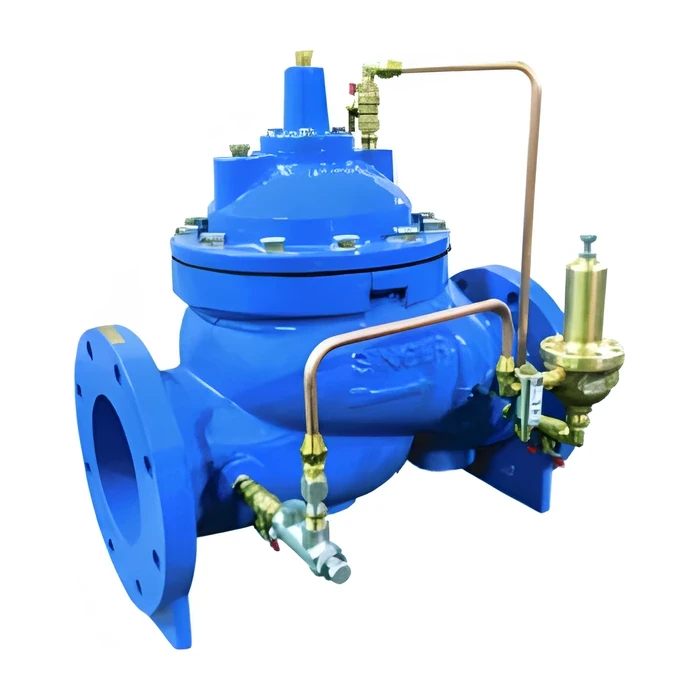
Pressure Reducing Control Valve
The Pressure Relief Valve (Singer Model 106-RPS / 206-RPS) is a hydraulically operated, diaphragm-actuated control valve based on the 106-PG / 206-PG main valve. The 81-RP pilot senses upstream pressure and keeps the valve closed until the inlet exceeds the set-point, at which point the valve opens quickly to relieve damaging overpressure and closes smoothly at an adjustable speed once pressure returns below the set-point.
Features & Specifications
Quick-opening relief of excess pressure with smooth, adjustable closing to prevent slam
Limits system pressure to the pilot set-point for relief, sustaining and surge duties
Full-port (106) or reduced-port (206) globe or angle main valve
Model 81-RP normally-closed pilot with spring ranges from 0.35 to 20.7 bar (5–300 psi)
ANSI Class 150 / 300 flanges; drilled to ISO PN10 / PN16 / PN25 / PN40
Sizes DN50–DN315; pressure classes PN16–PN40
Pilot-system materials: ASTM B62 bronze / B16 brass, AISI 303/316 stainless-steel trim, Buna-N / EPDM diaphragm and seals
Anti-cavitation cages (106-RPS-AC) available for continuous relief applications
UL / FM designation available (specify 106-RPS-8700A)
Dimensions & Technical Data
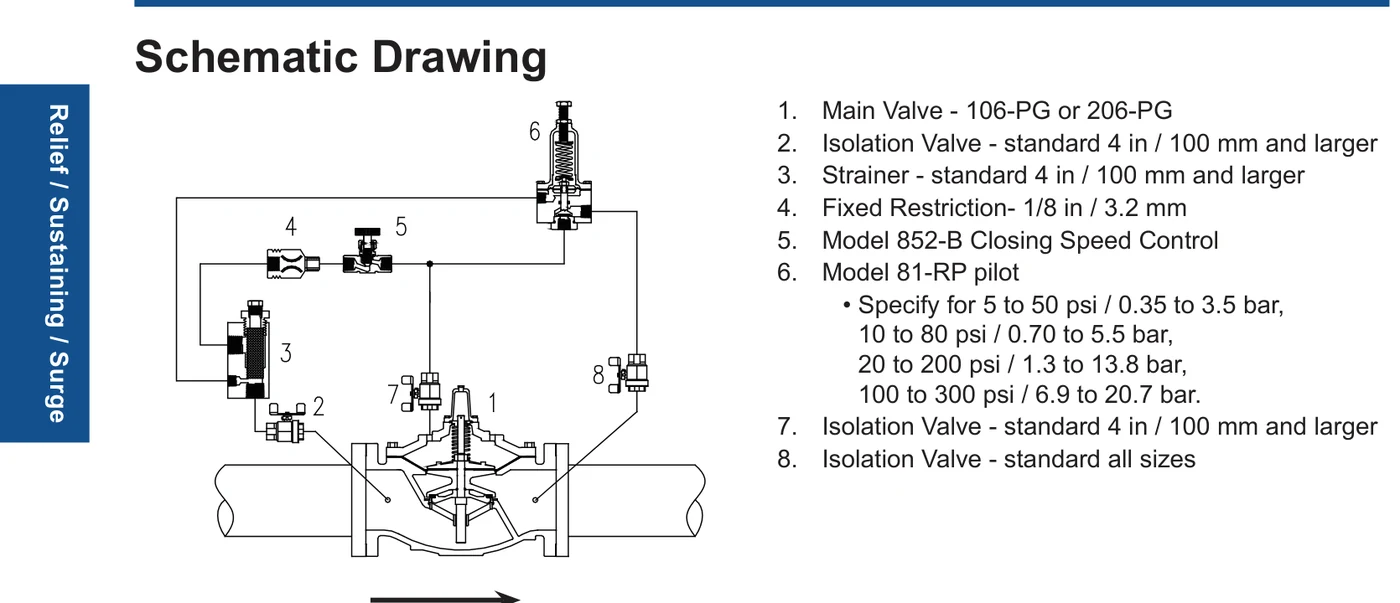
Pilot-system schematic (Schematic A-0423F) and momentary relief flow-capacity tables by valve size. Example momentary relief capacity (106-RPS): DN50 = 30 L/s, DN100 = 114 L/s, DN150 = 252 L/s, DN300 = 1009 L/s.
Size range: DN50-DN300
Pressure rating: PN16-PN40